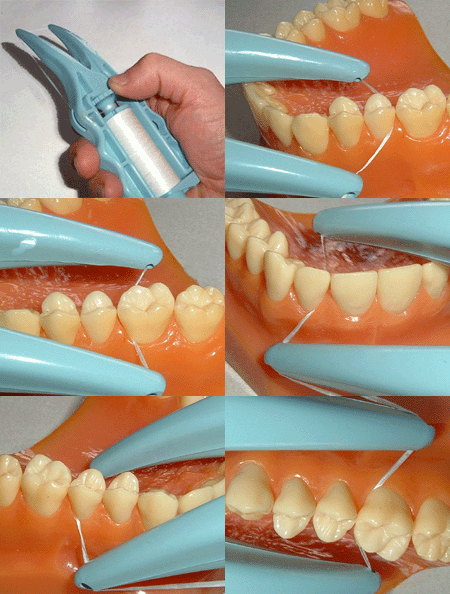
The benefits of flossing are widely known and as a dentist who is dedicated
to saving teeth, I can't understate the need for daily flossing. It is often
the make or break issue in saving teeth.
As a Dental Implant Surgeon, I am able
to replace missing teeth with titanium and porcelain and restore dignity and health
to many of my patients. With their new teeth, they can once again eat properly,
get all the nutrition from their food, and regain their health. They can talk
clearly and smile without hesitation. But I can't help thinking how often I've
counseled these same individuals, or others like them, about how flossing
could have helped to save some of their teeth by saving their gum tissue.
That is why I invented Fancy Floss because
the delicate gum tissue is essential to holding your teeth and when it begins
to breakdown, my work gets harder.
It is a scientific fact that flossing will improve the gum tissue and the health
of your teeth in several ways. Flossing removes plaque and disrupts the bacterial
acids that cause the plaque to harden into tarter. It stimulates the blood flow
to the gum tissue and revitalizes the tone and integrity of the gum tissues. Brushing
will remove large food particles from the teeth and some plaque but it can not
disrupt the bacterial between the teeth and under the gums. Only flossing can.
Some patients have actually brushed their gums away, trying to do what only flossing
can do - reach between the teeth and deep under the gums.
Flossing is so simple - and Fancy Floss
can make it even easier! Adults find it easier to use Fancy
Floss than the single thread flossing method and it's been very succesful
with teenages, who quickly learn the technique of one hand flossing! Fancy
Floss comes with over 1 years supply of floss in its handle. It's simple,
clean, refillable, and almost unbreakable.
Isn't it time for a change? Let me show you a
better way and start flossing today!
-Dr. Guy G. Giacopuzzi, DDS